Meta description: Retractable ratchet straps work for light-to-medium tie-downs. Learn how the reel and ratchet lock work, what the working load limit means, and when they beat a traditional strap.
Yes – retractable ratchet straps really work for the everyday tie-down jobs most drivers face. A spring-loaded reel stores the webbing inside a sealed housing, while the ratchet mechanism still locks tension like a traditional strap. That is why they are a popular choice for bikes, ATVs, and pickup cargo. The catch is simple: match the working load limit (WLL) to your cargo, not the biggest number on the box. This guide explains how the mechanism works, what load ratings mean, how they hold up on the road, and where they beat – or lose to – a standard ratchet strap.
Key Takeaways
- Retractable ratchet straps work for light-to-medium loads; the reel keeps webbing tangle-free.
- Always check the WLL on the label – a 3:1 safety factor means break strength is three times the WLL.
- They trade some raw tension for speed and clean storage versus traditional straps.
- A locked pawl holds tension through vibration and road bounce (WSTDA T-1 / EN 12195-2).
- For heavy or very long loads, a traditional ratchet strap still wins.
How Retractable Ratchet Straps Work
The auto-rewind reel
A retractable ratchet strap packs two systems into one housing. The first is a spring-loaded reel that pulls loose webbing back into the shell after every use, winding it around an internal spool instead of leaving a tail flapping in the wind. That is the biggest upgrade over a standard strap: no knots, no floorboard tangles, and faster solo setup. The closed housing also shields the webbing from dirt, UV light, and moisture – the three things that age polyester fastest – so a wound, covered strap simply lasts longer.
The ratchet lock
The second system is the ratchet and pawl lock from traditional tie-downs. A ratcheting pawl lets the windlass turn in only one direction, so each crank tightens the load, while a separate locking pawl drops into the gear teeth and holds that tension until release. Road vibration cannot spin the windlass backward, which keeps cargo secure under bounce and braking. To release, press the button or lift the pawl; the reel reels in the slack. Guide the loose end with your free hand – the spring can snap the webbing back quickly.
Retractable Ratchet Straps Load Ratings and Strength
Working load limit vs. break strength
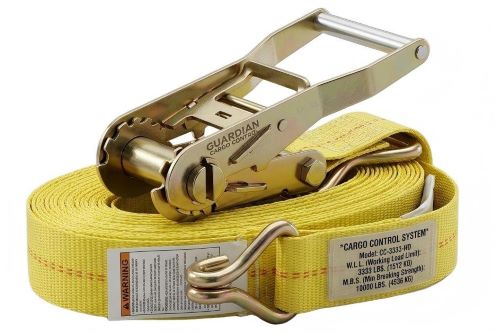
Two numbers decide safety: the working load limit (WLL) and the break strength. The WLL is the weight you can carry in normal use; break strength is where the strap fails. Manufacturers set the WLL by dividing break strength by a safety factor – usually 3:1 for cargo control gear, so a 3,000 lb break-strength strap carries a 1,000 lb WLL. Never load near break strength; the WLL keeps you far from that point. Always read the label and keep the webbing flat – a twisted strap loses capacity because the load sits on fewer fibers.
Real-world capacity and how we build them
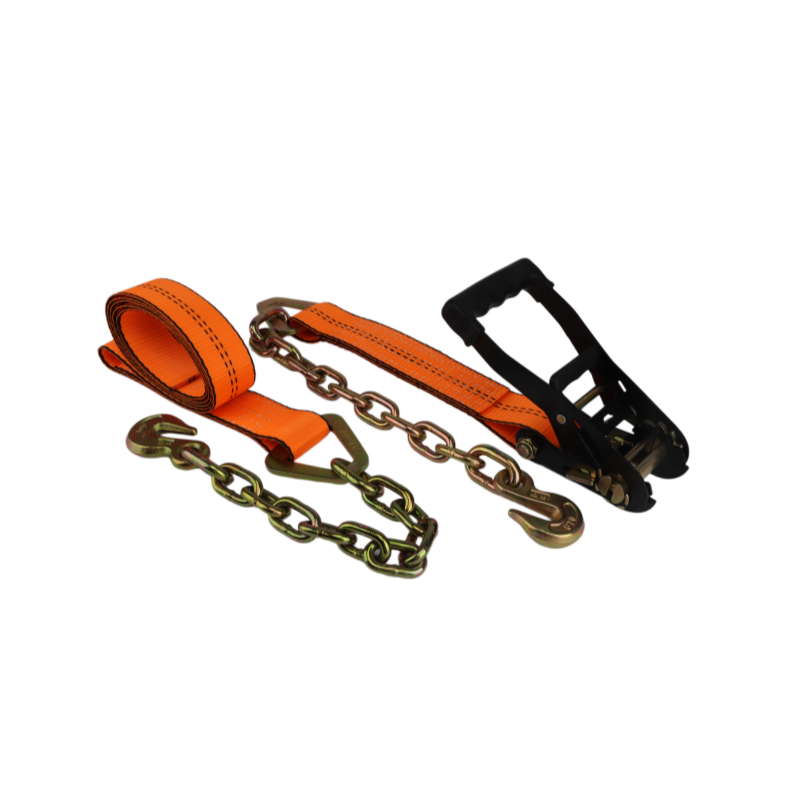
Retractable models are rated for light-to-medium loads, and that is where they shine. 2-inch automatic retractable ratchet straps with S hooks are built for repeated shock loading on trailers and trucks, using carbon- or alloy-steel hardware with a salt-spray-tested finish rated beyond 500 hours. As a trailer-accessories manufacturer and wholesale supplier with an in-house factory for forging, CNC, and welding since 1998, we supply them through OEM and ODM programs for distributors needing custom widths, hooks, and private-label packaging. A flat, undamaged strap holds its full WLL; inspect the webbing and spring before each trip, since a weak spool is the most common failure point in cheap units.
How the two strap types compare for everyday tie-downs:
| Factor | Traditional Ratchet Strap | Retractable Ratchet Strap |
| Max tension | Higher – best for heavy loads | Good for light-to-medium loads |
| Storage | Loose webbing, can tangle | Wound inside a sealed housing |
| Setup speed | Slower, manual spooling | Faster, often one-hand operation |
| Price | Lower | Higher |
| Best use | Long, heavy, irregular cargo | Bikes, ATVs, daily pickup cargo |
Road Security and When to Choose Retractable Ratchet Straps
Hold under vibration and load shift
A properly locked ratchet holds tension through constant vibration and road bounce. The locking pawl stays engaged in the gear teeth, so shaking cannot work the windlass loose the way a cam buckle can. Standards back this up: the U.S. WSTDA T-1 and Europe’s EN 12195-2 both anchor the WLL to a 3:1 safety factor against minimum break strength. Re-check tension after the first few miles – settling can loosen any strap slightly, and a 10-second re-tighten prevents most road failures.
Best uses – and where traditional wins
Retractable straps are the right call for light-to-medium loads you secure often: bikes, ATVs, outdoor gear, and pickup cargo. For an ATV or UTV, use at least four rated straps – a 1,400 lb machine needs four straps each rated at 1,400 lb or higher, because a hard turn or stop can put the whole load on one tie-down at a time. Our guide to ATV and UTV towing accessories covers the matching hitches, couplers, and straps for that setup. Traditional ratchet straps still win for very long loads, maximum tension, and irregular industrial cargo needing every inch of length and the strongest hold.
Retractable ratchet straps really do work – for the right job. They trade a little raw tension for tangle-free storage, one-hand speed, and longer-lived webbing, and they hold secure under road vibration when the WLL is respected. Match the rating to your load, keep the webbing flat, and re-check after the first few miles. Pick a retractable model for daily light-to-medium tie-downs, and keep a traditional strap for the heavy, long, or irregular loads.
FAQ
Q: Do retractable ratchet straps hold as tightly as traditional ones?
A: For their rated load, yes. The pawl lock holds tension the same way; the difference is maximum tension, not security. Traditional straps reach higher break strength, which is why they stay the choice for heavy hauling.
Q: How do I know the WLL is safe for my cargo?
A: Read the label. The WLL reflects a 3:1 safety factor, so break strength is roughly three times that number. Choose a WLL above your cargo weight with margin, and use four straps for a 1,400 lb ATV.
Q: What causes a retractable strap to fail?
A: Most failures trace to a weak spring or spool in low-quality units, or a twisted and frayed webbing. Buy from a manufacturer that salt-spray tests its hardware and inspects before shipment.
About the author
FTrade Content Team: Ningbo Fortune Time International Trade Co., Ltd. (FTrade) has manufactured trailer couplers, hitches, locks, and cargo-control hardware in Ningbo, China since 1998, with a second production base in Thailand. The team designs, lab-tests, and field-fits tie-down and towing products for OEM and wholesale customers across North America, Europe, and Australia, following SAE J684 and ISO 9001 quality processes.