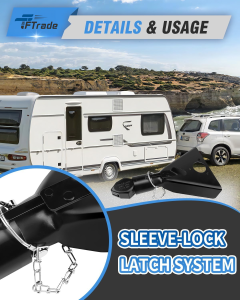
Quick answer: Yes — a hitch receiver adapter is safe when you respect its rating and fit. It is a size bridge between a receiver and an accessory, not a strength upgrade. Used inside its limits, it is a dependable, standards-compliant solution.
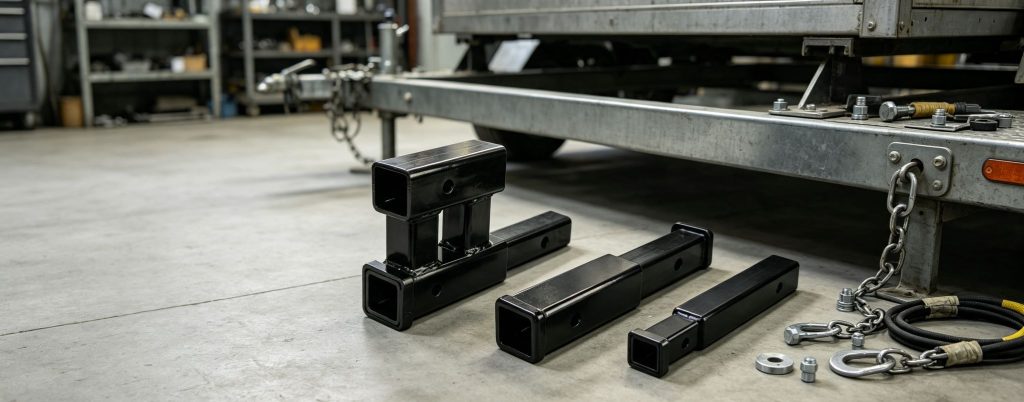
If you own more than one towing accessory, you have likely hit the classic mismatch: a 2-inch shank that will not seat in a 2.5-inch receiver, or a bike rack built for a 1.25-inch tube. A hitch receiver adapter solves that exact problem. It is a sleeve or reducer that lets mismatched parts connect without buying a new hitch. The honest answer is that these adapters are safe when drivers use them as the manufacturer intends — never as a way to raise the towing limit. A trusted supplier machines each unit to a fixed Gross Trailer Weight, and the lowest-rated part in the chain still decides what you can tow. This guide covers what an adapter does, how to fit one safely, and the mistakes that turn a helpful part into a real hazard.
What a hitch receiver adapter does and when it helps
How it bridges the size gap
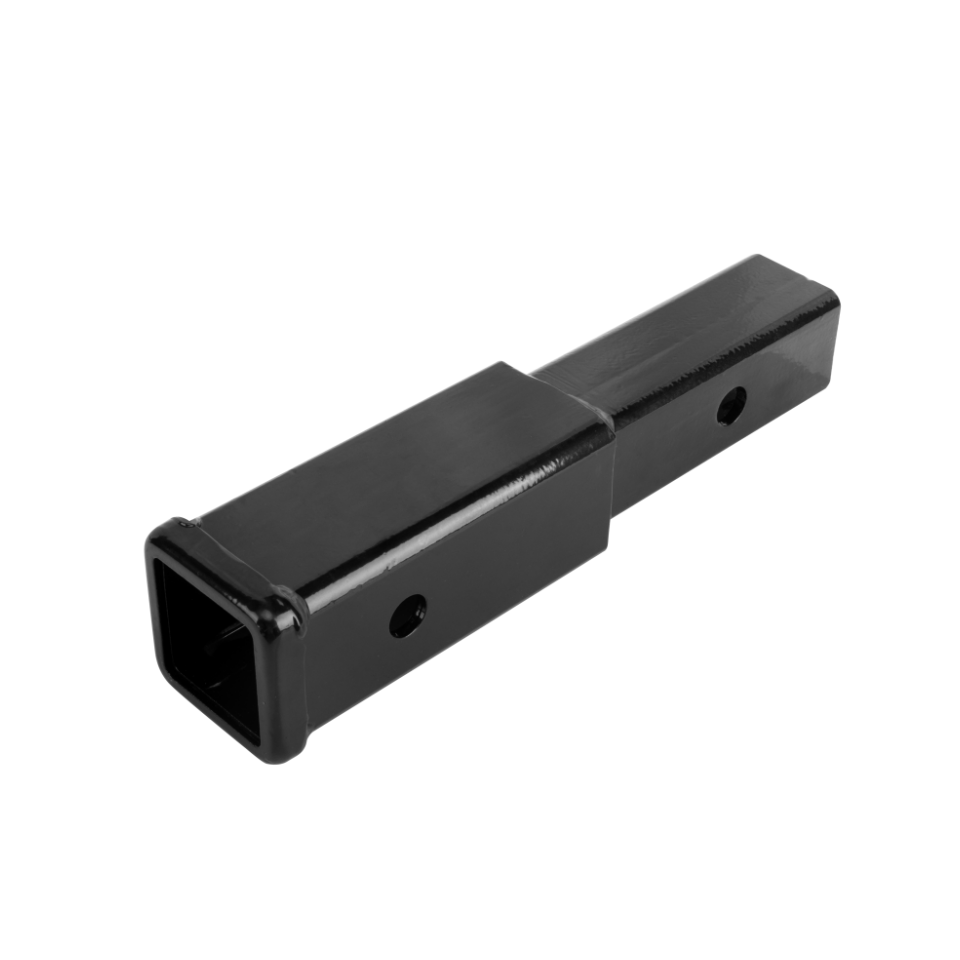
A receiver tube adapter sits inside the receiver tube and shrinks the opening to match the accessory shank. A pin then locks the assembly together. It performs one job: let a smaller accessory fit a larger receiver, or the reverse. It does not add capacity and it does not change the hitch class. Because it is a narrow steel spacer rather than a structural upgrade, the vehicle’s frame and hitch still carry the actual load.
Common types you will find
Manufacturers build reducers, sleeves, and combination reducer-extenders. FTrade’s line, for example, runs in carbon steel and covers the conversions fleets actually need:
| Adapter style | Example (FTrade) | Size conversion | Rating |
| 3″ → 2-1/2″ reducer sleeve | Carbon-steel hitch reducer | 3″ receiver to 2-1/2″ shank | Matches receiver class |
| 2-1/2″ → 2″ reducer sleeve | Hitch receiver reducer adapter | 2-1/2″ to 2″ | Matches receiver class |
| Reducer + 7″ extension | Adapter reducer, 7-inch | 2″ to 1-1/4″ | 3,500 lbs GTW |
| Reducer + 6.5″ extension | Adapter reducer, 6.5-inch | 1-1/4″ to 2″ | 3,500 lbs GTW |
The accessory an adapter most often serves is the ball mount. Most North American trucks use a 2-inch receiver, while many bike racks and cargo carriers are built for a 1.25-inch tube, so a reducer is the bridge that keeps one vehicle useful for many jobs. For distributors and wholesale buyers, stocking the common conversions above covers the bulk of real-world mismatches.
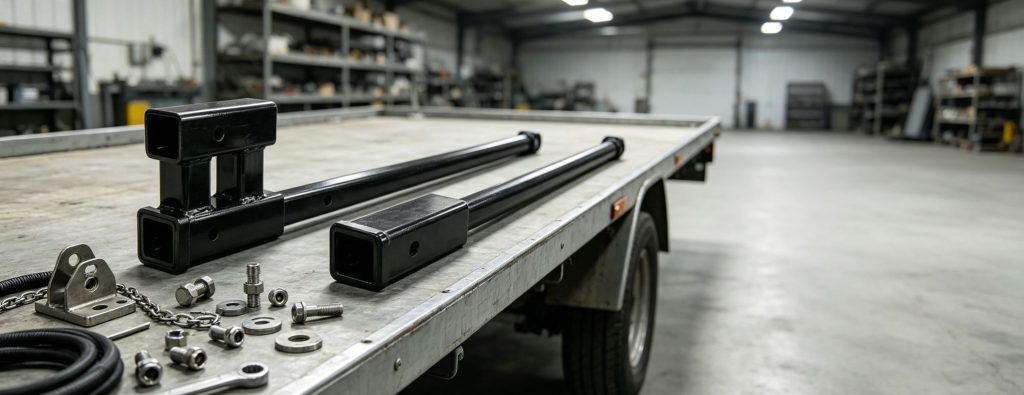
How to use a hitch receiver adapter safely
Match every rating in the chain
Safety comes down to one rule: the weakest link sets the limit. The vehicle, hitch, adapter, and any added length each carry a rating, and the smallest number governs. A 3,500-lb adapter cannot tow a 5,000-lb trailer even behind a Class IV hitch. FTrade runs 100% pre-shipment inspection and builds to SAE J684-related practice and ISO-controlled processes, so the printed rating is the number to trust. Two figures matter most: Gross Trailer Weight (GTW) and tongue weight — keep tongue weight at 10–15% of GTW for stable control.
Anything that pushes the load away from the receiver face adds leverage. A receiver tube extender does exactly that, which is why its rating stays at 4,000–7,500 lbs rather than matching the hitch behind it. The table below shows how each change affects safe towing.
| Change the adapter makes | Effect on safe towing |
| Adds length (extension) | Moves load farther from receiver, adding leverage; lowers safe tongue/GTW headroom. |
| Reduces receiver size | No capacity gain — rating stays limited by the smallest part in the chain. |
| Adds height (rise/drop) | Can shift tongue weight; keep 10–15% of GTW on the tongue. |
| Welding in place | Removes slop but blocks accessory swaps; rarely practical for daily use. |
Install and inspect before every trip
Use the supplied pin and clip, confirm a snug fit, and check for cracks, rust, or worn sleeves. Heavy use warrants weekly checks; salt, mud, or snow demand more frequent attention. A loose pin or deformed sleeve is a failure you can see coming — replace it rather than risk it on the highway. As a factory with in-house forging and CNC machining, we treat dimensional accuracy and a tight pin fit as the difference between a safe part and a returned one.
When a hitch receiver adapter becomes unsafe
Extra leverage and sway
Anything that extends the load away from the receiver face increases leverage, and more leverage makes a trailer sway sooner at speed. A 7-inch extension does precisely this, which is why its rating is held at 3,500 lbs instead of the hitch’s higher number. At highway speed a gust or a passing truck becomes a bigger event. Slow down when running an adapter, keep heavy cargo low and centered, and never let tongue weight fall outside the 10–15% window.
Real failure points to avoid
The most common failure is a ball-size mismatch. Standard hitch balls come in 1-7/8″, 2″, and 2-5/16″; couplers are machined with only 0.002–0.005 inch of clearance. Drop in the wrong ball and radial clearance jumps to roughly 0.062 inch — over 12 times the design tolerance — letting the latch skip after about 50–200 miles of towing. Verify ball size with a gauge before every hookup. Other avoidable failures include the wrong class of ball mount, a cheap unrated pin, and safety chains that do not match the trailer’s capacity.
A hitch receiver adapter is safe when used as intended and dangerous when treated as a capacity upgrade. Match the smallest rating in the chain, fit the correct ball, inspect before each trip, and reserve adapters for light, occasional mismatches like a bike rack. For heavy or constant towing, fitting the correct-size receiver removes the extra leverage entirely.
FAQ: Can an adapter raise my hitch class?
No. It bridges size, not class. A Class II receiver stays Class II no matter which reducer you drop in.
FAQ: Is an adapter safe for daily towing?
Yes, within its rating. Inspect the pin and sleeve often, especially in winter road-salt conditions, and replace at the first sign of wear.
FAQ: Adapter or the correct-size receiver?
For heavy or constant towing, fit the right receiver. Use an adapter for light, occasional mismatches such as a bike rack or cargo carrier.
About the author
FTrade Content Team — Ningbo Fortune Time International Trade Co., Ltd. The team has manufactured trailer couplers, hitches, receiver tube adapters, and towing accessories since 1998, with in-house forging, CNC machining, and 100% pre-shipment inspection across production facilities in China and Thailand, supplying OEM and ODM customers throughout North America, Europe, and Australia. This article reflects what the team has seen on the production floor and in QC logs.