Proper winching vehicle setup forms the core foundation of every safe vehicle recovery operation. Operators must first make a plan and establish clear communication before starting. Drivers position the rescue vehicle straight with the load. They engage all braking systems, set the transmission to neutral for an electric winch, and run the engine to supply power.
Incorrect setup causes dangerous vehicle slippage and line failure. Angled pulls create structural risks:
- Frame twist from angled pulling
- Frame distortion from uneven pulling or loading
- Undue lateral stress that could lead to mechanical issues when winch cable is not aligned straight
Proper hardware positioning prevents chassis damage.
Key Takeaways
- Line up the rescue truck straight toward the stuck vehicle so you keep full pulling power.
- Turn on the parking brake and put strong wheel blocks behind the tires to prevent sliding.
- Leave the vehicle engine running in neutral so it can supply steady power to the winch.
- Check all your rescue equipment and put a weight blanket over tight cables to stay safe.
Proper Line Alignment for Vehicle Recovery
Direct Line-of-Pull Positioning
Straight positioning provides the best stability during recovery work. The driver turns the rescue truck’s front bumper right toward the stuck vehicle. The line rolls smoothly onto the winch drum center. This straight line spreads force evenly across the frame.
Side pulls lower pulling power and put extra strain on gear.
A straight line gives you full pulling power. Every side angle takes away some strength. At a 30-degree angle, the pull stays safe (0-30 degrees). However, uneven line wrapping increases drum size, which lowers overall strength.
Snatch Block Rerouting for Angle Pulls
Trail obstacles often stop you from pulling straight. Drivers use a pulley to change line direction without bending the frame. The snatch block moves tension safely to an anchor. This setup keeps full strength and protects recovery gear.
Setting up a block requires following basic safety steps:
- Anchor selection: Use a strong tree with a protector strap, a truck hitch with a shackle, an anchor, or a tow hook. The shackle holding the block needs a higher load limit than the anchor pull force.
- Load calculations: The anchor handles twice the line pull force when pulling 180° back. Choose a block rated for double the winch strength (like an 18,000 lb block for a 9,000 lb winch). Never use weak blocks.
- Safety steps: Clear everyone away from the cable path before pulling. Put a heavy weight pad over the line between the winch and block. Pull slowly while watching the line and anchor closely.
- Pre-use check: Spin the pulley wheel by hand to ensure it turns smoothly. Test the side latch to confirm it locks tight. Check the outer shell for any cracks, rust, or damage.
Essential Winching Vehicle Setup Steps
Braking and Wheel Chock Placement
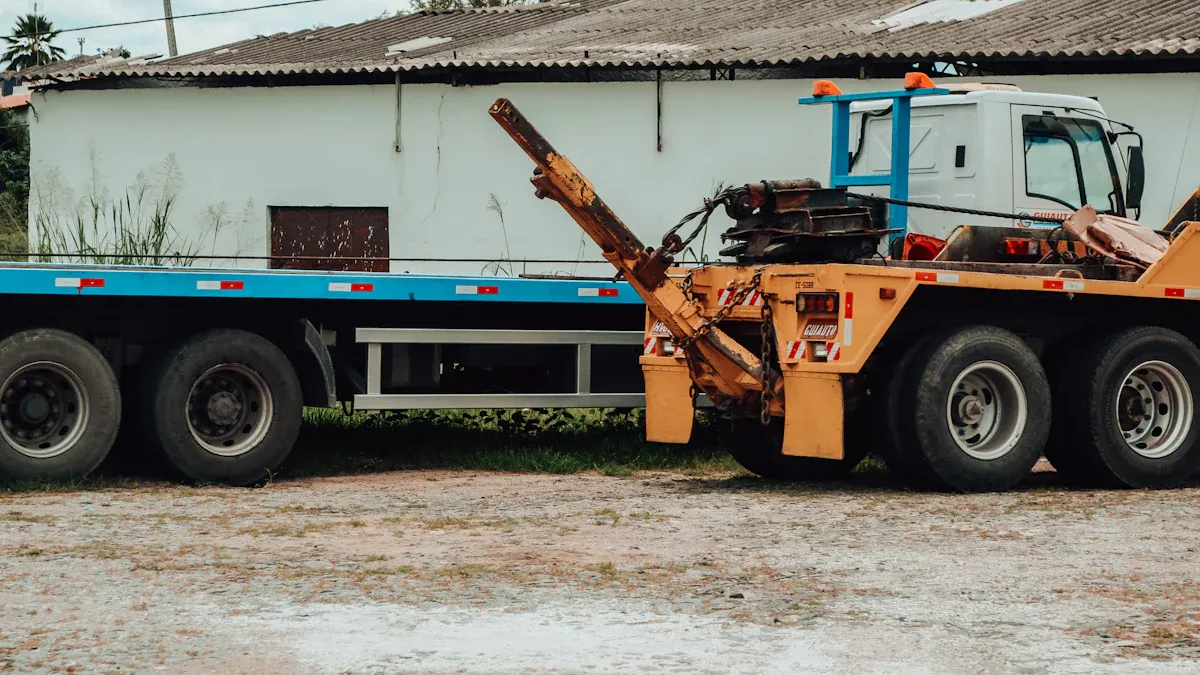
Operators execute a precise winching vehicle setup to maintain total mechanical stability throughout a vehicle rescue. Drivers park the recovery truck on the firmest ground available near the site. The operator engages the parking brake completely to lock the rear axle securely. The operator places heavy-duty wheel chocks directly behind the tires facing the direction of the pull. These chocks stop the recovery truck from sliding forward into the hazard area. Slippery mud, wet clay, loose sand, and steep inclines reduce tire traction rapidly during high tension pulls. Proper chock positioning provides crucial mechanical resistance that keeps the rescue platform stable.
The standard industry engineering guideline dictates selecting a winch rated for an absolute minimum of 1.5 times the vehicle’s Gross Vehicle Weight Rating (GVWR). Many professional operators choose higher ratios (2x or 2.5x) when outfitting vehicles for deep mud or steep, demanding terrain, as suction forces drastically multiply the required pulling effort.
Operators must account for these heavy suction forces during initial setup. High structural resistance requires maximum braking support before tension applies to the winch line. Placing heavy-duty wheel chocks firmly against the tires adds vital mechanical friction. This physical barrier stops unwanted chassis motion on mud or loose rock.
Transmission Controls and Anchor Points
Operators manage interior vehicle controls carefully before applying tension to the winch drum. Drivers set the vehicle transmission to neutral when operating an electric winch. Setting the transmission to neutral allows the engine to run without turning the vehicle drive shaft or transmission gears. The running engine powers the electrical alternator continuously during operation. The alternator supplies steady high voltage to the electrical system, which protects the vehicle battery from severe power drain. Hydraulic systems use direct power take-off systems, but electric winch systems always rely on neutral gear selection to maintain safety.
Heavy extraction tasks often exceed the holding friction of four rubber tires resting on slippery soil. In these challenging situations, operators establish auxiliary anchoring behind the recovery vehicle. Operators connect the rear chassis frame of the rescue truck to an external solid anchor point, such as a large mature tree or a secondary backup truck. Operators wrap a wide tree-saver strap flat around the base of the natural anchor. Rated steel bow shackles or synthetic soft shackles attach the tree-saver strap directly to the rear frame recovery points. This auxiliary tie-down transfers massive mechanical loads directly into the ground rather than straining the vehicle suspension.
A proper winching vehicle setup keeps the recovery truck completely stationary throughout the entire winching process. Correct mechanical anchoring prevents severe frame stress and protects vital drivetrains during vehicle recovery. This thorough mechanical preparation ensures complete control, prevents vehicle movement, and maintains safety during heavy extraction operations on difficult off-road terrain.
Power Management and Rigging Gear Protocols

Engine Management and Voltage Support
Workers control electrical power wisely during tough vehicle pulls. Operating an electric winch pulls a lot of energy from the car battery. Keeping the rescue car engine running protects the electrical power level. Good talking within the team keeps the whole pull smooth and safe.
When preparing for a difficult pull, it is good practice to increase the engine speed to a “high idle,” around 1200-1500 RPM. This allows the alternator to spin faster and produce its maximum rated amperage…
Steady output from the generator protects winch parts from big damage. Low electrical power makes the winch motor get too hot and stop working.
When voltage at the solenoid input falls below approximately 11V under load, the motor slows, draws even more current to compensate, generates heat, and risks permanent damage.
Holding high power levels helps the electric motor stay cool and work well during long pulls.
Line Dampers and Hardware Inspection
Pulling gear needs a full check before workers start tightening the cable. Helpers use simple hand signs to talk with the driver clearly. Crew members check rope connectors, strong D-rings, and heavy pulley blocks before starting every job.
The team checks every pulley block using these clear steps:
- Spin the wheel by hand to make sure it turns smoothly.
- Look at the center pin, fasteners, and hooks for signs of wear or damage.
- Stop using the block if the wheel gets stuck from broken parts.
- Read the weight rating label and check the side plates and wheel groove.
Safety rules say you must place a heavy weight pad over active winch cables. These pads catch energy if the cable snaps. Top gear makers suggest using tested equipment to meet safety rules. Smart workers choose strong FTrade tools to meet safety guidelines during hard off-road jobs.
Proper execution guarantees absolute safety during every vehicle recovery operation. Operators follow a straightforward step-by-step pre-pull checklist before starting work:
- Position the rescue truck completely straight toward the stuck load.
- Engage the primary parking brake system firmly.
- Place heavy-duty wheel chocks directly behind all tires.
- Inspect dampers, rigging gear, and the active winch line carefully.
- Establish constant visual communication between all active team members.
Effective communication protects every operator working near high-tension lines. Taking two extra minutes to double-check the complete winching vehicle setup prevents costly equipment damage and chassis stress. Thorough mechanical preparation guarantees a safe extraction every single time.
FAQ
Why should operators set the transmission to neutral during an electric winch recovery?
Drivers shift into neutral while winching so the car engine spins without turning wheels. Running this way keeps the engine speed high. The alternator makes plenty of power, which protects electronics and runs the winch safely.
How does clear communication improve safety during recovery work?
Clear talking stops bad accidents while pulling tight cables. Helpers use their hands or small radios to talk to the driver. Constant communication keeps everyone away from dangerous cables while the driver works the winch.
What is the standard weight rating requirement for a recovery winch?
Basic rules say your winch must pull 1.5 times the Gross Vehicle Weight Rating. Many drivers pick stronger winches when pulling heavy trucks out of deep mud, loose sand, or up steep hills.
Why is proper winching vehicle setup necessary before pulling?
Setting up your winch car correctly keeps the rescue truck from moving during the pull. It stops frame damage, keeps tires from sliding, and protects the rope. Good setup protects gear and keeps workers safe on bad trails.