A trailer hitch creates the connection between a vehicle and heavy cargo. Safe towing always relies on properly matched equipment. Four major hitch styles are widely accepted across the industry: receiver hitches, fifth-wheel hitches, gooseneck hitches, and pintle hitches. Many truck owners install robust FTrade trailer hitches to haul cargo, campers and equipment. Buyers select hitches according to their vehicle type and specific hauling tasks. Drivers should first review weight ratings and maximum towing limits. Learning how each trailer hitch operates helps you make the right selection.
Key Takeaways
- You can choose four main trailer hitch options. They are receiver, fifth-wheel, gooseneck, and pintle.
- Truck bed hitches like fifth-wheel and gooseneck models help heavy loads stay safe and very steady.
- Pintle hitches offer great motion for tough off-road jobs.
- Drivers must match hitch ratings with vehicle limits. This helps ensure maximum towing safety.
Understanding the Four Types of Trailer Hitches
Overview of Primary Hitch Categories
Operators need purpose-built hardware for secure heavy towing. Industry standards separate these components into four core groups, with defined maximum weight thresholds for each class.
| SAE Hitch Category | Maximum Weight Limit | Load Description |
|---|---|---|
| Class I | Up to 2,000 lbs (910 kg) | Light loads |
| Class II | Up to 3,500 lbs (1,600 kg) | Light loads |
| Class III | Up to 5,000 lbs (2,300 kg) | Larger loads (e.g., campers, boats) |
| Class IV | Up to 10,000 lbs (4,500 kg) | Larger loads (e.g., campers, boats) |
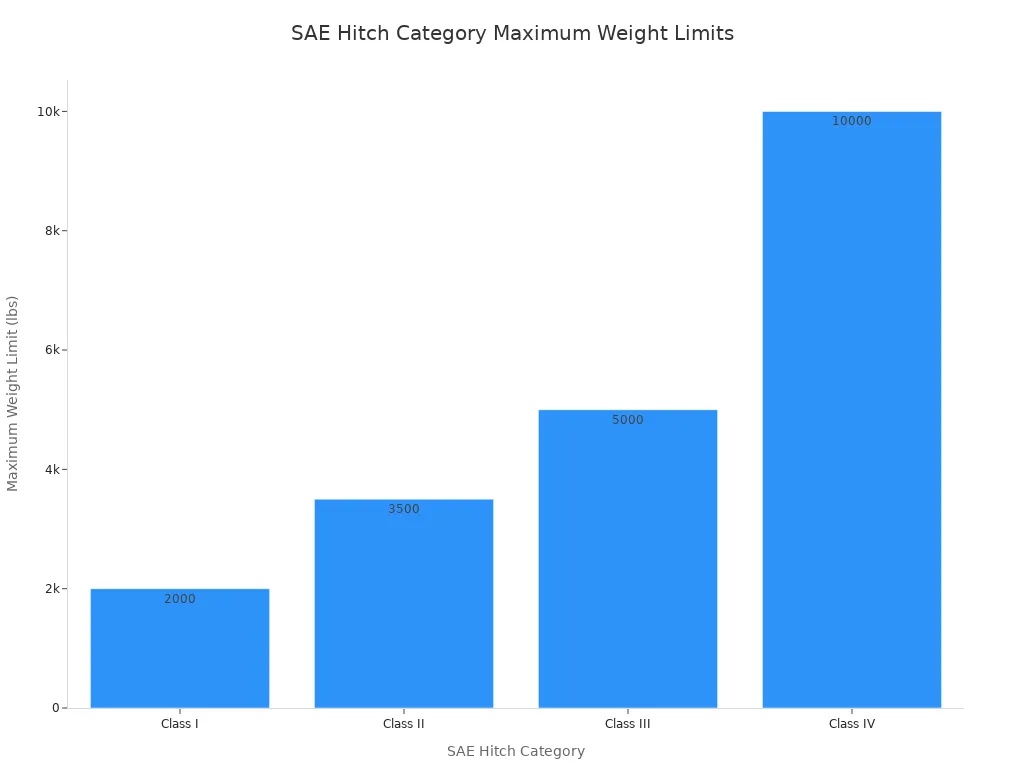
Bar chart comparing maximum weight limits in pounds for SAE Class I through Class IV hitches.
Vehicle design directly impacts towing safety. Passenger vehicles use compact couplings for light gear, while heavy-duty pickups require reinforced hardware for substantial loads. Global manufacturers such as FTrade build durable steel hitches to support reliable travel.
Key Functional Differences
Mounting location determines how each hitch performs. Rear-mounted units fasten beneath the rear bumper frame, while bed-mounted assemblies sit inside the pickup truck bed.
| Hitch Type | Structural Mounting Point | Weight Distribution Capability |
|---|---|---|
| Rear-Receiver | Attaches directly to the vehicle’s frame at the rear. | Leverage is applied at the back; requires spring bars/rods to redistribute weight evenly across axles. |
| Bed-Mounted (5th Wheel/Gooseneck) | Installed directly in the truck bed, positioned over the rear axle. | Directly distributes the load weight across the truck axles for optimal balance. |
| Pintle Hitch | Mounts to the rear bumper or receiver. | Places significant leverage and concentrated weight on the rear of the vehicle. |
Cargo placement drastically changes vehicle balance. Rear-mounted hitches push downward on the tail section, whereas bed-mounted designs transfer load directly over the drive tires. Drivers should compare these configurations before purchasing heavy-duty trailer hitches for work.
Receiver Trailer Hitches and Classes
Standard Receiver Tube Sizes
Receiver hitches remain the most common option on the market. Frame-mounted steel tubes accept ball mounts, and standard tube openings define each hitch class. Smaller openings suit light loads on passenger vehicles, while larger tubes handle heavy weights on work trucks.
| Hitch Classification | Receiver Tube Opening Size |
|---|---|
| Class I | 1.25 inches |
| Class II | 1.25 inches |
| Class III | 2.0 inches |
| Class IV | 2.0 inches or 2.5 inches |
| Class V | 2.5 inches or 3.0 inches |
Each class supports different towing accessories. B2B buyers source matched sizes to fit fleet vehicles. FTrade produces these standard receiver hitches for global distribution.
Comparing Receiver Hitch Classes
Payload capacity rises with each hitch class. Operators must confirm ratings before towing. Class I handles small loads, while Class V supports heavy machinery transport.
| Hitch Class | Maximum Gross Trailer Weight (GTW) | Maximum Tongue Weight (TW) |
|---|---|---|
| Class 1 | Up to 2,000 lbs | Up to 200 lbs |
| Class 2 | Up to 3,500 lbs | Up to 350 lbs |
| Class 3 | Up to 8,000 lbs | Up to 800 lbs |
| Class 4 | Up to 10,000 lbs | Up to 1,000 lbs |
| Class 5 | Up to 20,000 lbs | Up to 2,000 lbs |
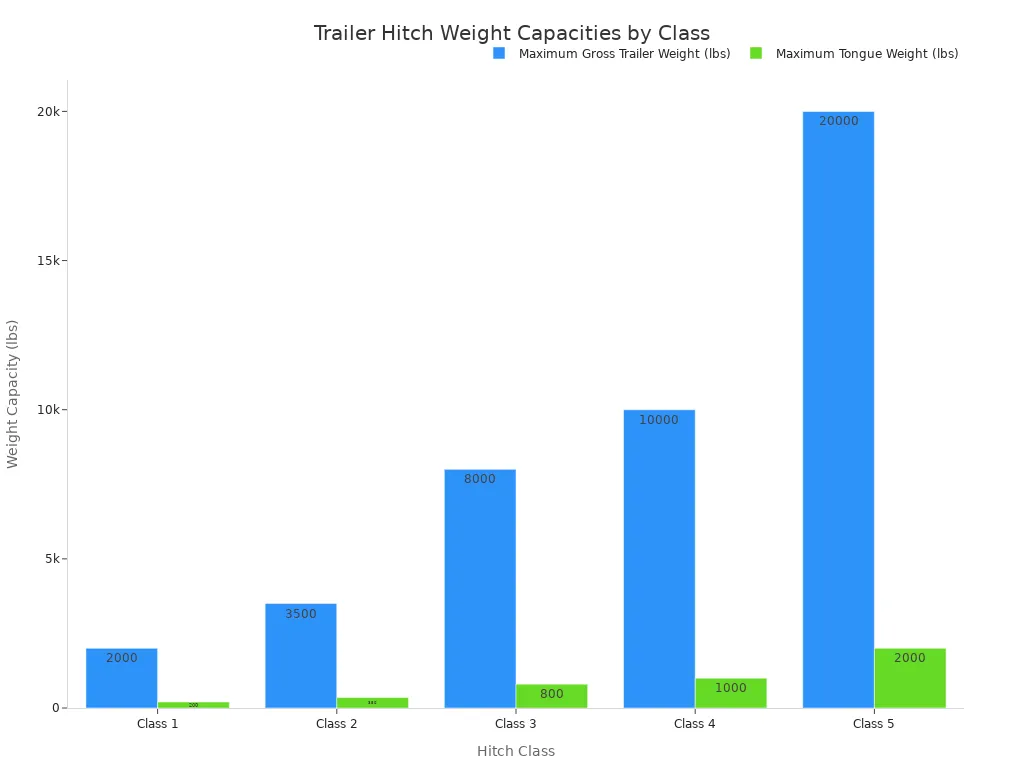
Bar chart comparing maximum gross trailer weight and maximum tongue weight for receiver hitch Classes I through V.
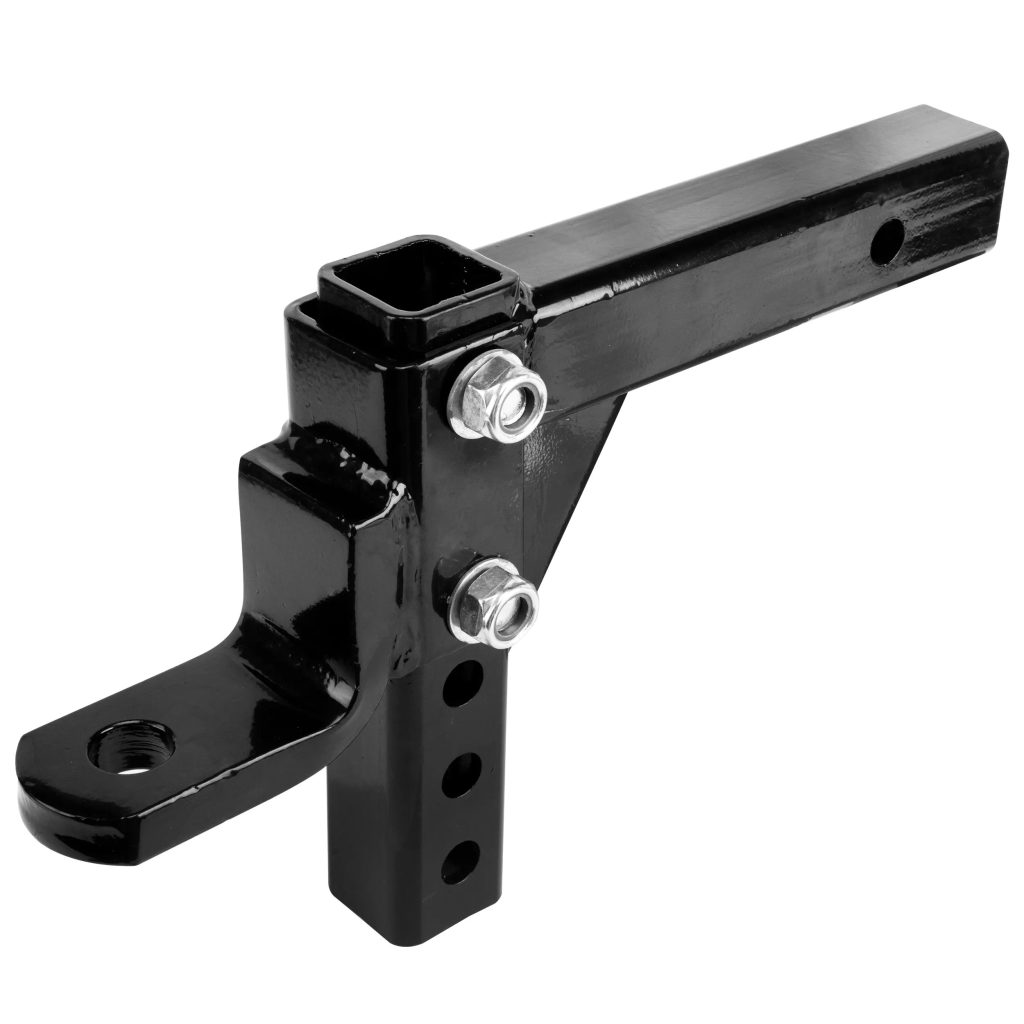
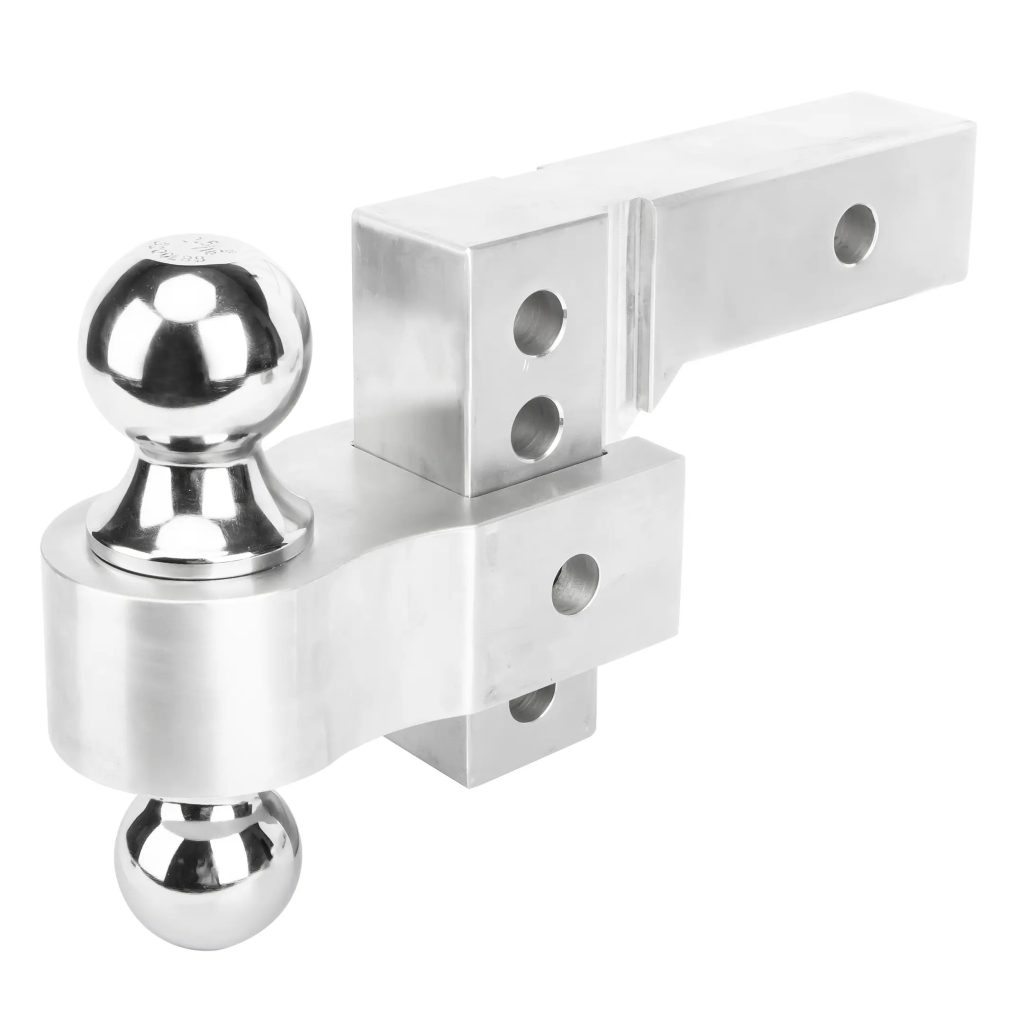
Suppliers offer custom-built receiver hitches. Wholesale clients often order adjustable units built for uneven terrain. Lightweight aluminum hitches deliver strong rust resistance and hold up well against harsh weather. FTrade adheres to strict North American industry standards. Every unit undergoes inspection and load testing before shipment to ensure towing safety.
Fifth-Wheel and Gooseneck Hitches
Fifth-Wheel Kingpin Couplers
Truck owners install fifth-wheel assemblies inside pickup beds. Bed-mounted hitches create a safer setup for heavy towing. A fifth-wheel hitch locks onto a trailer kingpin, positioning RV weight directly above the coupling point. This pivot sits over the rear axle. The smart placement shifts trailer weight forward so the truck frame absorbs load efficiently.
Front axles share part of the tongue weight, easing strain across the whole frame. Less stress falls on suspension and brakes, delivering stable highway towing. Long recreational trailers track smoothly, and drivers maintain better control through turns. Proper weight balance protects tires and slows brake wear. Fifth-wheel setups commonly tow loads between 16,000 and 24,000 lbs. Most standard RV combinations cap near 25,000 lbs.
Gooseneck Truck Bed Balls
Commercial operators frequently choose gooseneck hitches for extremely heavy loads. A heavy-duty hitch ball mounts in the center of the truck bed floor. This ball supports loads up to 30,000 lbs. Farmers use them with livestock trailers and flatbed equipment haulers. Mounting the load over drive wheels improves traction when climbing hills and navigating loose dirt roads.
Stowable gooseneck balls deliver outstanding flexibility. Drivers remove the ball quickly to restore a flat truck bed. Daily loading operations proceed without obstructions, letting fleets switch easily between general cargo and heavy equipment transport. Business buyers can order custom systems built for tough working conditions. FTrade manufactures robust towing hardware engineered for structural reliability.
Pintle Hitches for Heavy Duty
Hook and Lunette Ring Mechanics
Pintle systems provide heavy-duty coupling for demanding equipment. A vehicle-mounted pintle hook locks into a circular lunette ring on the trailer. The latching mechanism secures the connection. This hook design allows extra movement over rough terrain. Flexible articulation across multiple angles reduces stress transferred to the vehicle frame.
| Performance Feature | Pintle Hitch Capability | Standard Ball Hitch Limitation | Off-Road Operational Benefit |
|---|---|---|---|
| Load Capacity | Higher weight limits | Lighter commercial loads | Transports extreme payloads on job sites |
| Rotational Articulation | High vertical and horizontal range | Restricted angle movement | Negotiates steep drops, inclines, and turns |
| Structural Durability | Pivots freely in multiple directions | Rigid connection transfers shocks | Reduces stress on trailer and hitch assembly |
Industrial and Off-Road Applications
Many industries rely on pintle hitches for rigorous work. Military fleets fit them on tactical trucks. Farmers pull large wagons across uneven ground. Construction crews haul heavy dump trailers, and public works departments tow utility equipment. Dump trucks benefit greatly from pintle setups; gooseneck hardware obstructs the bed and interferes with dumping operations.
FTrade builds heavy-duty towing hardware with corrosion protection. Manufacturers apply zinc, epoxy and powder coatings. Steel components receive surface treatments to resist outdoor weathering. Quality construction supports wholesale distributors worldwide.
Selecting the Best Types of Trailer Hitches
Evaluating Vehicle Towing Capacity
Car owners must find weight limits before towing. Check the door sticker for exact limits. Find limits in the manual as well. Subtract curb weight from GCWR to calculate limits. Heavy loads hurt the car engine badly. Big loads ruin car transmissions very fast. Extra weight makes stopping take much longer.
Towing Capacity = GCWR − Curb Weight
Drivers must count total passenger weight first. Add truck bed cargo and fuel volume. Subtract payload from total allowance to save engines. This protects truck engines on steep roads. Smart calculations keep steering very responsive now. Safe weights keep brakes working well always. Proper balance stops early car frame damage. Smart owners protect trucks by staying safe.
Matching Gross Trailer Weight
Tongue weight must align with overall haul weight. Aim to keep tongue weight close to 10 percent of total trailer weight. Adequate downward pressure stabilizes the combination and prevents dangerous highway sway. Poor weight balance triggers trailer oscillation, which can lead to loss of control at highway speeds.
For receiver hitches carrying loads above half the rated capacity, install a weight distribution system. Large race trailers require spring leveling bars, and heavy toy haulers depend on these bars for safety. Proper weight balance avoids rear-end sag and restores traction on front tires for secure long-distance highway travel. Choose heavy-duty hitches built with built-in safety margins.
Comparing Different Types of Trailer Hitches
Select coupling systems based on job requirements and vehicle frame design. Receiver hitches suit light daily hauling. Fifth-wheel assemblies work best for large RV campers. Gooseneck hitches keep truck beds clear when not towing. Pintle hooks excel on rough off-road job sites.
| Connection Category | Ideal Application Profile | Primary Structural Advantage |
|---|---|---|
| Receiver | Passenger vehicles, boat trailers, light utility gear | Versatile receiver tubes, quick accessory swaps |
| Fifth-Wheel | Large highway RV campers, long recreational trailers | Superior axle weight distribution, smooth highway tracking |
| Gooseneck | Heavy livestock trailers, agricultural flatbeds | Maximum bed utilization, tight turning radius on farms |
| Pintle | Construction dump trailers, tactical military gear | Extreme multi-axis rotation, rugged off-road durability |
Only use hitches that meet formal safety standards. SAE J684 governs light towing assemblies rated up to 10,000 lbs. Trusted brands including FTrade use high-grade steel and protective coatings to resist rust. Rigorous load testing produces dependable trailer hitches for commercial use. Review all these factors before heading out on the road.
Towing operators choose from four core coupling systems. Frame-mounted receiver hitches handle light accessories. Fifth-wheel units mount inside truck beds for RVs. Gooseneck hitches balance heavy farm loads over vehicle axles. Pintle hooks secure bulky industrial equipment across rough terrain. Exceeding weight limits impairs handling and extends stopping distances. Drivers must observe tongue weight limits to avoid permanent frame damage. Rigorous static load testing verifies safety under high stress. Wholesale buyers consult established brands such as FTrade for equipment. Experienced manufacturers also deliver custom towing hardware solutions.
FAQ
Which hitch type supports the heaviest trailer weights?
Gooseneck and fifth-wheel tools carry top weight. The gooseneck ball hauls 30,000 pounds. It fits in truck beds. Work fleets pull big gear with it. They drive long trips safely.
What is the main benefit of a pintle hitch connection?
A pintle hook pivots on rough roads. Off-road trucks use this hook design. It handles bumpy ground well. The loose ring cuts frame stress. It aids steep drops and turns.
How do drivers choose between receiver hitch classes?
Drivers match hitch classes to vehicle limits. Class 1 holds 2,000 pounds. It carries small cargo easily. Class 5 hauls 20,000 pounds. It moves heavy gear safely. Check manuals before driving.
Why choose aluminum hitch options for vehicle setups?
Aluminum towing parts offer strong power. They weigh very little, too. FTrade builds aluminum hitches now. These parts fight bad weather. They resist rust very well. They keep road trips safe.