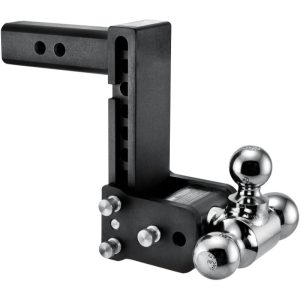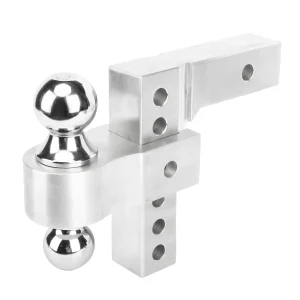
Yes — a drop hitch is safe to use when it is correctly rated, properly installed, and inspected before each trip. A drop hitch is simply a ball mount with a downward offset that brings the hitch ball down to a trailer coupler riding higher than the receiver; the offset is geometry, not a structural weakness. What actually governs safety is the hitch class, the certification behind it, and how you use it. In North America that certification is SAE J684, the standard defining how couplers, hitches, and safety chains are fatigue- and impact-tested for trailers up to 10,000 lb. This guide explains what the engineering tests show, walks through a real sizing example, and lists the inspection habits that keep every tow secure. For background on certified drop hitches and ball mounts built to that standard, see the linked range below.
Are Drop Hitches Safe? What the Engineering Actually Shows
The short answer is yes — but only inside the part’s rated limits. A drop hitch carries the same gross trailer weight (GTW) and tongue weight as any straight ball mount of the same class; the downward bend is just material placed lower in the assembly. SAE J684 qualifies a hitch by testing the whole assembly, so a properly rated drop model is held to the identical strength bar as a straight one.
Ratings Beat the Drop
Never let the bend fool you. A 6-inch drop in Class III still tops out at 8,000 lb GTW, exactly like a straight mount. The table shows how the class — not the drop — sets the ceiling.
| Hitch Class | Receiver Size | Max GTW | Typical Use |
| Class I | 1.25″ | 2,000 lbs | Bike / utility trailers |
| Class II | 1.25″ / 2″ | 3,500 lbs | Small campers |
| Class III | 2″ | 8,000 lbs | Boats, caravans |
| Class IV | 2″ | 10,000 lbs | Horse / livestock |
| Class V | 2.5″ – 3″ | 12,000–20,000+ lbs | Heavy equipment |
What the Tests Actually Measure
SAE J684 and the related V-5 program put hitches through static proof loads, impact simulation, and fatigue cycling that mimics years of potholes and hard braking. Separately, corrosion resistance is checked under ASTM B117 salt-spray exposure; reputable production lines target 500+ hours before red rust appears. Those numbers are what separate a documented part from a mystery import — and the evidence a buyer should ask for.
The Real Failure Modes
When drop hitches do fail, the cause is almost never the offset. The patterns field engineers see are (1) overloading past GTW or tongue-weight limits, (2) a worn or missing locking pin on adjustable drops that lets the head walk out, and (3) corrosion fatigue at a weld or forging point that was never proof-tested. A longer drop does extend the lever between the receiver pin and the ball, which slightly raises the bending moment on the shank under the same tongue load — one more reason to size the drop no larger than needed and to respect the class rating. None of the common failures is fixed by a shorter drop; they are fixed by rating, hardware, and inspection.
Choosing the Right Drop Hitch — Height, Class, and Tongue Weight
Sizing the offset wrong is the most common mistake. Too much drop points the trailer nose up; too little drops it down. Both invite sway and longer stopping distances, so measure before you buy.
A Worked Example
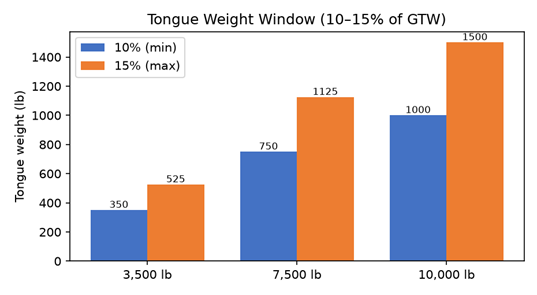
Take a half-ton pickup whose 2-inch receiver sits 17 inches off the ground, towing a 7,500 lb boat trailer whose coupler measures 25 inches to its center. The needed drop is roughly 25 − 17 = 8 inches. At that 7,500 lb GTW, tongue weight should land at 10–15%, i.e. 750–1,125 lb on the ball. Pick a Class III (8,000 lb) unit with an 8-inch option, confirm the trailer balls are rated to match, and you have a level, legal rig rather than a guess.
Tongue Weight Is the Real Rule
NHTSA’s towing guidance puts tongue weight at 10–15% of GTW for stable handling; below that the trailer can sway, above it the rear axle is overloaded. The weakest link — hitch, ball, or receiver — sets the safe maximum, so never pair a Class V hitch with a Class II drawbar.
Steel vs. Forged Aluminum
Material changes how a hitch ages, not whether a certified one is safe. Both options below meet SAE J684 when independently tested:
| Property | Stamped Steel | Forged Aluminum |
| Tensile strength | Higher | Slightly lower |
| Fatigue life | Excellent | Good with thicker sections |
| Weight | Heavier | ~40% lighter |
| Salt-spray (ASTM B117) | 500+ hr with E-coat | 500+ hr with anodize/E-coat |
Drop Hitch Safety Checks and the Case for Certified Manufacturing
A safe drop hitch stays safe only with routine care. Third-party certification — not the brand name — is what you can verify, so treat the paperwork as part of the product.
Pre-Trip Checklist
- Inspect the shank and ball for cracks, pitting, or rust.
- Confirm the locking pin is seated and, ideally, keyed.
- Torque the ball to the vehicle spec; a loose ball is a failure waiting to happen.
- Grease the receiver and moving parts; a monthly schedule is a sensible baseline.
- Rinse the receiver after winter-salt or coastal exposure to slow corrosion.
- Verify the GTW and tongue-weight stamp on the shank before every heavy tow.
What to Ask a Manufacturer
When sourcing hitches — from a local distributor or a direct factory — request the SAE J684 / V-5 test report, the ISO 9001 certificate, and batch inspection records. A credible supplier (whether OEM/ODM or wholesale) provides these without hesitation; a missing paper trail is itself the red flag. Established manufacturers with 20+ years and dual production bases — for instance in Ningbo and Thailand — typically publish this documentation because their North-American partners require it. For setups that change height often, our related guide on adjustable hitches covers the same safety rules with more detail.

Key takeaways: size the drop to the coupler height, never exceed the hitch class, and inspect before every trip. A certified manufacturer’s test report is the cheapest insurance you can buy for a towing setup.
FAQ
Q: Can a drop hitch reduce towing capacity?
A: No. Capacity comes from the hitch class, not the drop. A 12-inch drop in Class III still stops at 8,000 lb GTW — always read the stamp on the shank before towing.
Q: How often should I inspect a drop hitch?
A: Before every trip for cracks and pin security; regrease monthly, more often in winter salt. A 10-minute check prevents most roadside failures.
Q: Are aluminum drop hitches safe?
A: Yes, when SAE J684 certified. Our finishes resist 500+ hours of salt spray for coastal and snow towing — pair them with stainless hardware for the longest life.